
So how does Terre Haute, Indiana get a Holocaust museum, in particular a Holocaust museum dedicated to one aspect of the Holocaust?
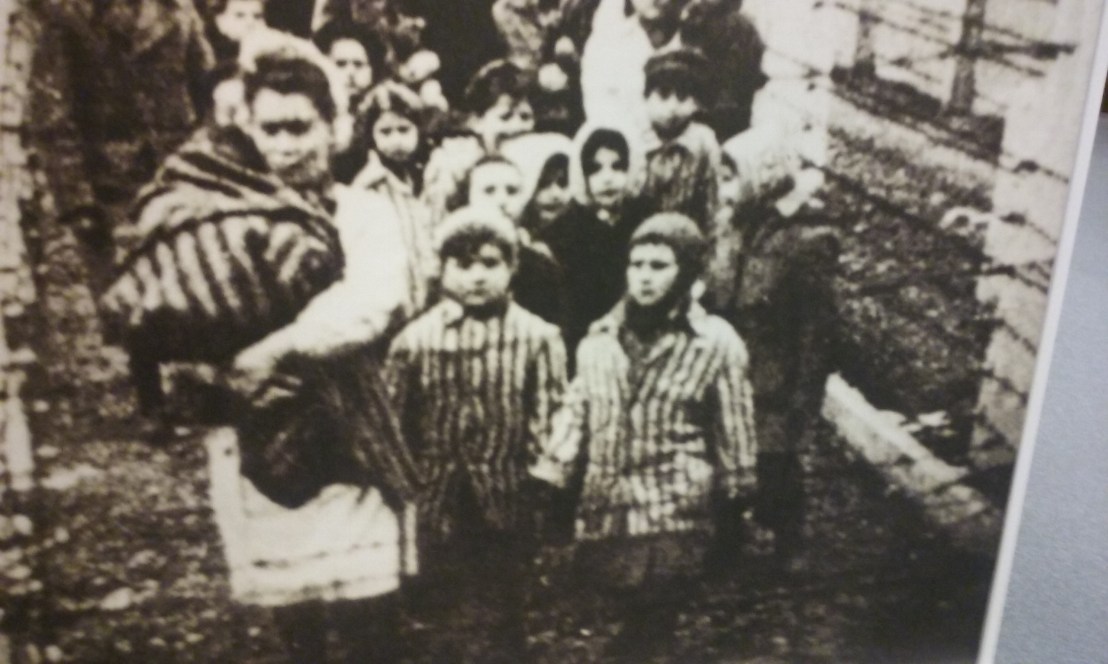
After their liberation by the Soviets in 1945, the Kor sisters were taken in by a convent in Katowice, Poland. One of their neighbors from Romania, Mrs. Rosalita Csengeri, tracked them down…
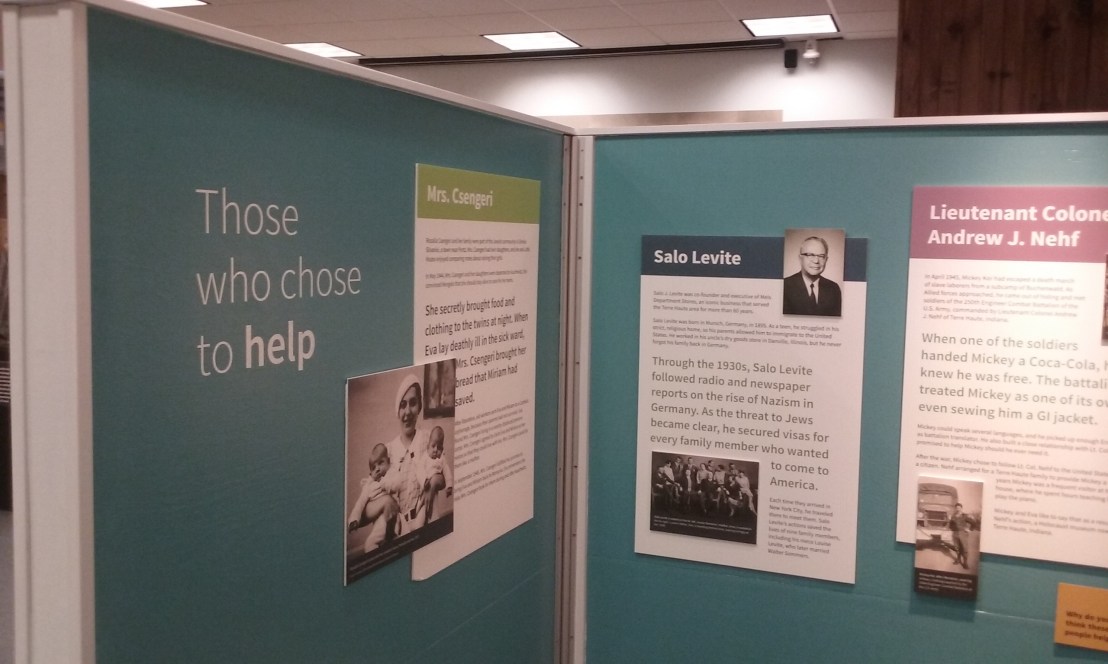
As Romania sunk into Communism, the Kors relocated to Israel and thrived.
Lt. Col. Andrew J. Nehf was from Terre Haute, Indiana. When his division liberated Buchenwald, they sort of adopted Mickey Kor, a young prisoner who was fluent in several languages and served as an interpreter. Kor followed Lt. Col. Lehr back to Terre Haute, where Lehr help him adjust to life in the United States.
Kor travelled to Israel, met the Mozes twins, married Eva and returned to Terre Haute where they built their lives.
In 1978, a miniseries about the Holocaust raised awareness about it. Survivors of the Holocaust, who had kept silent, began to speak out. Eva and Miriam Kor set out to find the other Mengele Twins, founding the CANDLES institute to carry out the search. Eventually 122 individuals were found of the 1,500 “selected” for the experiments. A museum was founded in Terre Haute.
Meanwhile Eva Mozes Kor developed an intense urge to forgive her captors. This forgiveness is not any sort of condoning the acts, it is forgiving their perpetrators. As such Mrs. Kor has become a major exponent of forgiveness, forgiving the guards and sadists, “adopting” one of their grandchildren and speaking around the country about it.
In 2003, one of the Oklahoma City bomber’s fanboys did this to avenge Timothy McVeigh, the Oklahoma City bomber executed at the Federal prison near Terre Haute:
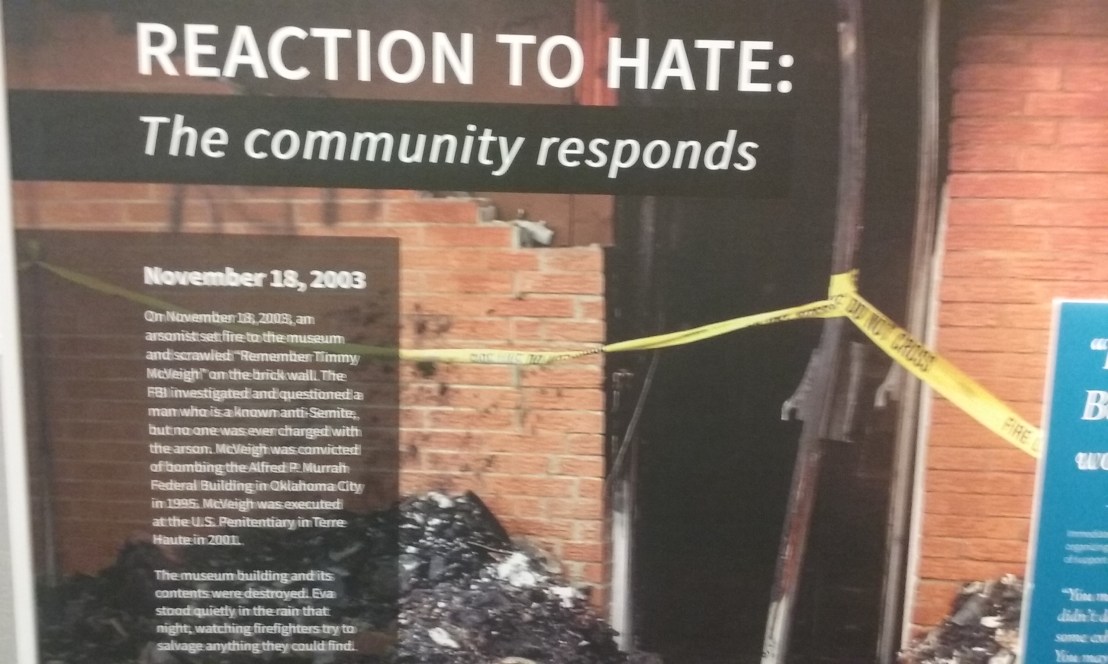
The good people of Terre Haute and CANDLES simply built a larger facility, including this display that emphasizes the positive response of the Terre Haute community, including $25,000 raised by schoolchildren.
To finish the tour, here is a (not very good) photo of an experimental installation where people can ask questions of a virtual Holocaust survivor.
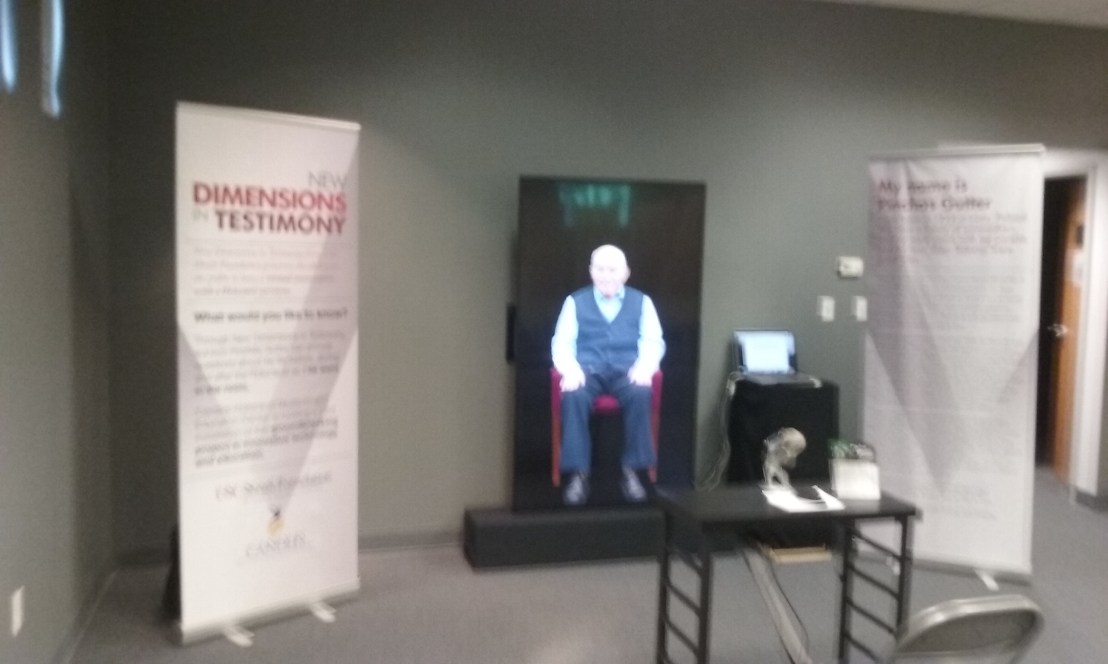
Pinchas Gutter is a Holocaust survivor, though not among the Twins. The USC Shoah Foundation created this exhibit, in which he was asked about 2,000 questions regarding the Holocaust and his answers were filmed. If you speak into the microphone (and the docent or intern are around), his avatar will respond to a closely related question. Mine was about what could have been done to stop Hitler — he said that it was important to keep nations from fighting other nations — it is an AI after all that decided which of the 2,000 questions should be answered.
Nancy Edwards was the volunteer docent on the day I visited. She has forty years of experience teaching German, which probably helps her in understanding the primary documents of the Holocaust. The questions I had for her were discussed in the first installment of the series, but the salient points bear repeating.
First, Germany was in a very bad place after World War I and the Depression. It should be added that the last Weimar administration chose to fight the depression with austerity, which brought the usual results of austerity during a depression.
Second, Germany was an intensely patriarchal society. Some of the flowering of Weimar culture was not, so the instinct to oppress was already there. The ideal was father in the workplace, mother in the home and children obeying authority figures without question. Hitler just had to become the “strong father” that such a system craves.
Third, Germans of the time did what they were told.
We disagreed on one point, though possibly because I was unclear. I believe that the step by step discrimination targeted against Jews and others were needed to pave the way for ever harsher measures, culminating in the Holocaust. Edwards believed that the responses of Germans were baked in by their culture — it should be mentioned that the Germans themselves have been trying to purge the second and third elements from German society, though with varied success.
 The Lafayette Sentinel